


Navratri is an important Hindu festival dedicated to Goddess Durga, celebrated for nine days. This festival is significant and takes place four times a year, including two special occasions known as Gupt Navratris. The two main celebrations are Shardiya Navratri, which occurs in the month of Ashwin, and Chaitra Navratri, celebrated in the month of Chaitra.

Ghatasthapana Muhurat for Shardiya Navratri
According to Panchag, the Pratiapda Tithi of Ashwin Shukla Paksha Ghatasthapana Muhurat 06:09 AM to 08:06 AM IST
Duration – 01 Hour 56 Mins
Pratipada Tithi Begins – 01:23 AM on Sep 22, 2025
Pratipada Tithi Ends – 02:55 AM on Sep 23, 2025
Kanya Lagna Begins – 06:09 AM on Sep 22, 2025
Kanya Lagna Ends – 08:06 AM on Sep 22, 2025

Among the four Navratris observed throughout the year—Magha (winter), Chaitra (spring), Ashadha (monsoon), and Sharad or Shardiya (autumn)—Shardiya Navratri is considered the most important, often referred to as Maha Navratri.
9 Forms of Maa Durga for 9 Days of Navratri 2025
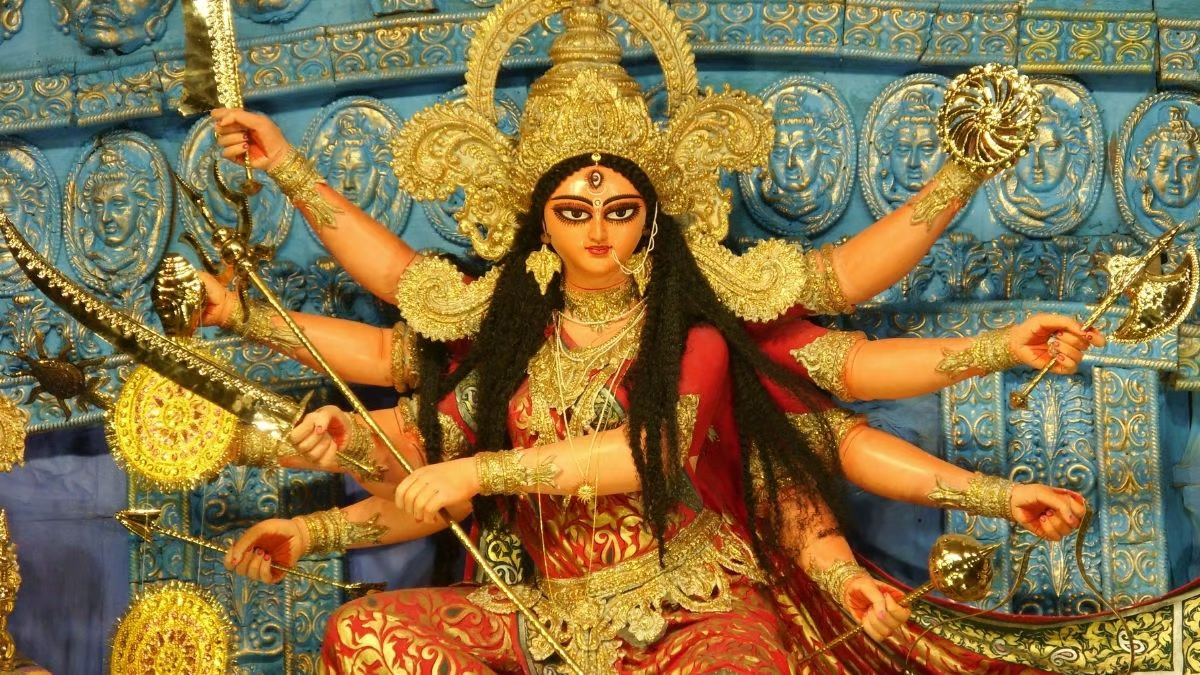
Day 1: Devi Shailaputri
Day 2: Devi Brahmacharini
Day 3: Devi Chandraghanta
Day 4: Devi Kushmanda
Day 5: Devi Skandamata
Day 6: Devi Katyayani
Day 7: Devi Kalaratri
Day 8: Devi Mahagauri
Day 9: Devi Siddhidatri


What to offer to 9 forms of Maa Durga during 9 days of Shardiya Navratri?
During the nine days of Shardiya Navratri, each form of Maa Durga is prayed, and devotees perform specific rituals. They offer bhog and flowers to the goddess, along with observing fast to seek their divine blessings. Here’s a guide on what to offer to each Maa Durga during the nine days of Shardiya Navratri.
Devi Shailaputri

Devi Shailaputri is worshipped on the first day of the Navratri festival. You can offer white flowers like jasmines, as she adores white florals. Further, sugarcane offerings of cow’s milk are also considered holy for this goddess.
Devi Brahmacharini

On the second day, you may offer yellow things such as chrysanthemum flowers, bananas and turmeric to Devi Brahmacharini.
Offering for the third day can include red flowers, sweets such as kheer and even red fruits like apples for the Devi Chandraghanta.
Devi Kushmanda

For Devi Kushmanda, you must include an offering with pumpkins, as she loves pumpkins. Malpua and red flowers can also be included in the offering for the fourth day.
Devi Skandamata

On the fifth day of Navratri, you can offer beautiful roses, white flowers and bananas. She also loves sandalwood incense and the bhog of sooji halwa to Devi Skandamata.
Devi Katyayani

Orange flowers such as marigolds and honey can be offered to Devi Katyayani during the Navratri rituals.
Devi Kalaratri

Devi Kalaratri is fond of offerings that include dark colours and sesame seeds. Your offering can also include black lentils and jaggery.
Devi Mahagauri

During your rituals for Devi Mahagauri, you can offer white flowers such as lotus and include foods like kheer and barfi.
Devi Siddhidatri

Devi Siddhidatri loves yellow flowers, specifically yellow roses. The offering may include fruits such as bananas on this day.

Unlocking the Power of Fasting: Essential Do’s and Don’ts for a Meaningful Festival Experience
Many devotees worldwide fast during Navratri in pursuit of spiritual enlightenment and a deeper connection with the divine. Fasting practices can differ significantly among individuals. Some choose a Nirjala vrat, which involves fasting without water, while others prefer a Falhaar fast, where they consume only certain foods like fruits and nuts.
Here are some do’s and don’ts to remember while fasting during the nine-day festival. It’s important to wake up early, take a bath before sunrise, and wear clean, new clothes. Begin your day by worshiping Goddess Durga and seeking her blessings. To stay energized, make sure to keep yourself hydrated. You can drink coconut water, fruit juices, lemon water, and milk to help maintain your energy levels.
During your fast, you can enjoy foods like tapioca pearls (sabudana), potatoes, buckwheat flour, and water chestnuts (singhara). Dairy products such as paneer, curd, and milk are also allowed.
However, there are several items to avoid during this festive season. Non-vegetarian foods, including meat, eggs, garlic, and onions, should be excluded. Devotees should also refrain from any intoxicants, such as alcohol, cigarettes, and drugs. Additionally, it’s best to avoid sea salt, wheat flour, grains, and cereals during Navratri.
For those observing Vijayadashami, the timing details are as follows: the Dashami Tithi begins at 10:58 AM on October 12 and ends at 9:08 AM on October 13.
Shravana Nakshatra will begin at 5:25 AM on October 12 and end at 4:27 AM on October 13.
Celebrating Tradition: Mumbai’s Iconic Durga Pandals and Their Rich Heritage
Bombay Durgabari Samiti Celebrates 94 Years of Tradition

Bombay Durgabari Samiti is one of Mumbai’s oldest Durga pandals, marking its 94th year of celebrating the festival this season. Each year, it attracts numerous visitors eager to experience its vibrant atmosphere. The idol of Goddess Durga showcased at the pandal is crafted by a skilled artisan from Kolkata. Since its inception, Bombay Durgabari Samiti has beautifully blended traditional and modern rituals, making it a cherished part of the city’s festive landscape.
Bengal Club at Shivaji Park: Celebrating 89 Years of Durgotsab

Located in Shivaji Park, the Bengal Club has been organizing Durga Puja since 1922. Each year, the 2.5-acre pandal transforms into a vibrant space featuring a variety of stalls offering delicious cuisine, stylish accessories, and West Bengali antiques. Last year, they showcased an eco-friendly idol of Goddess Durga made with non-toxic, water-soluble paints and clay. Following traditional Bengali customs, the morning puja is conducted with great reverence, while the evenings feature lively events such as conch-blowing ceremonies and Dhunuchi dance competitions. This year, the Bengal Club proudly celebrates its 89th Durgotsab in Mumbai.
Bombay Sarbojanin Durga Puja Samiti: Celebrating 77 Years of Tradition in Juhu

The North Bombay Sarbojanin Durga Puja, organized by the North Bombay Sarbojanin Durga Puja Samiti, is one of Mumbai’s oldest puja ceremonies. Founded by Padma Shri Shashadhar Mukerji in 1948, it is popularly known as “Mukherjee Durga Puja.”
This celebration attracts numerous celebrities, including Rani Mukerji, Kajol, Ayan Mukerji, Tanuja, Amitabh Bachchan, and Jaya Bachchan. The committee is committed to environmental sustainability, honoring an eco-friendly Durga idol brought in from Kolkata. This year, the pandal proudly celebrates its 77th year of Durga Puja in Mumbai.
Mumbaichi Mauli: A Grand Welcome for the Beloved Devi

Every year, Mumbai’s beloved Mumbaichi Mauli is welcomed with a spectacular procession. This year, the Aagman took place on September 29, 2024, bringing joy to devotees as they celebrated the arrival of the Devi. While several pandals are set up in the Pratiksha Nagar area during Navratri, Mumbaichi Mauli stands out for its rich history and extravagant decor, making it one of the oldest and most cherished pandals in Mumbai.
Navi Mumbai Bengali Association: A Must-Visit Durga Pandal in Vashi

For residents of Navi Mumbai and nearby areas, the Navi Mumbai Bengali Association’s Durga Pandal is a must-visit destination. Showcasing traditional Bengali puja, this pandal offers a vibrant and immersive experience. Visitors can enjoy a variety of cultural activities and savor authentic Bengali cuisine during the Maha Bhog. Additionally, the association streams live events online via YouTube and Instagram, ensuring that devotees can participate from anywhere.
